Dutch mayors have no power. None, says Ahmed Aboutaleb. For sixteen years he ran a city of 675,000 people and 175 nationalities anyway. At Amsterdam Business Forum 2026, he showed what he used in its place, with three lessons you can put to work on Monday.
“The balance of the sheet doesn’t make you a leader.”
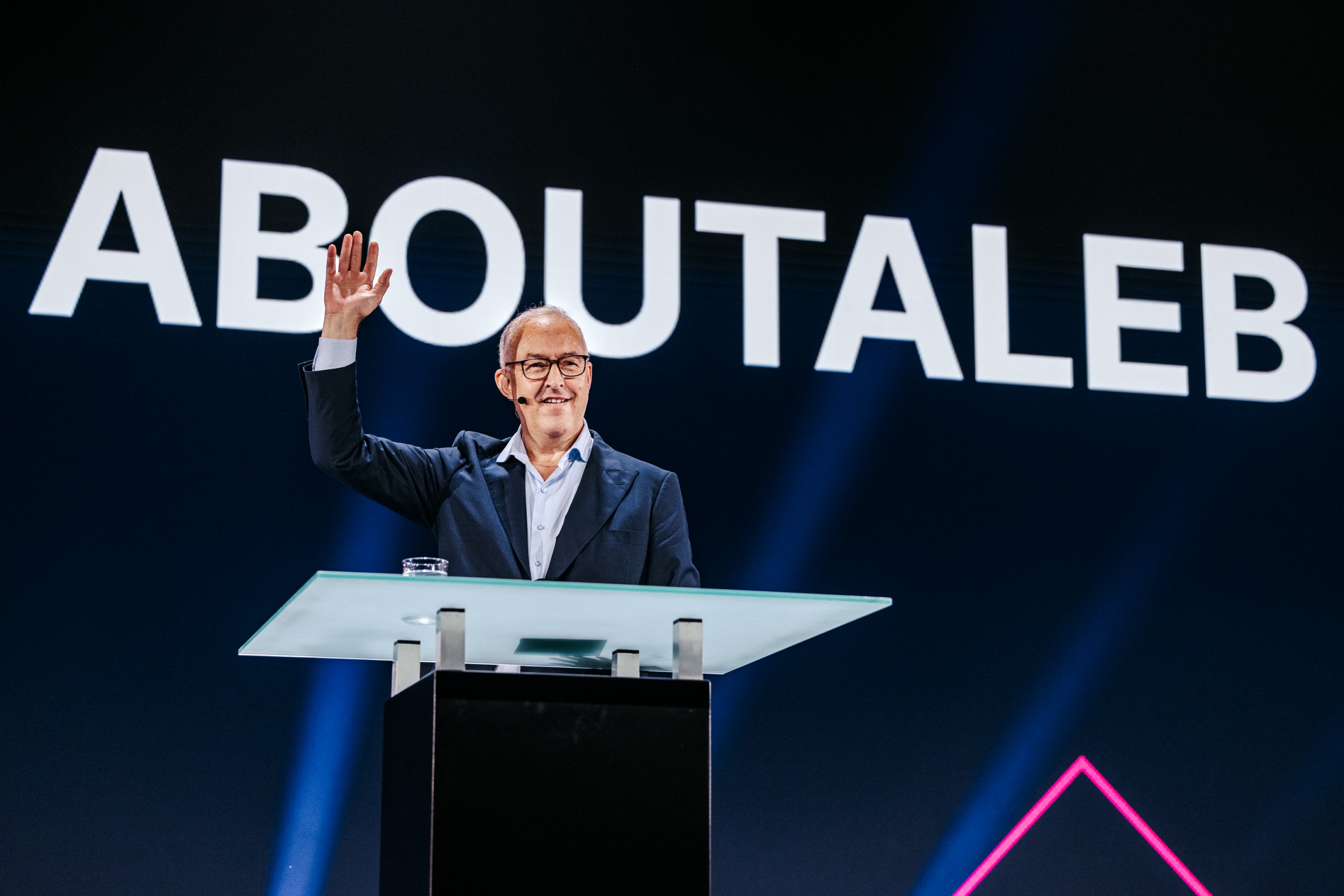
Ahmed Aboutaleb, former mayor of Rotterdam and one of Europe’s most respected political leaders, opened Block 2. He spoke about human leadership, with empathy over dominance. He was born in a Moroccan village in 1961 and came to the Netherlands in 1976. Fifteen years walking without shoes, he tells the room. Bread for lunch, and no idea whether there will be anything for dinner. His grandmother carried twenty-five liters of drinking water on her back, from a source far away. He still builds water facilities there, privately, and is working on the sixth.
He trained as an engineer, became the first Muslim vice mayor of Amsterdam, and was mayor of Rotterdam from 2009 to 2024. World Mayor in 2021. Three questions run through his talk: what makes a city strong, who owns the street, and what to do when you have no power at all.
Insight 1: Build the city on its people
“Investing in cables, bridges, waterways, wonderful buildings and skyscrapers is not enough to make a strong city. The strength of the city is measured by the strength of the people.”
Rotterdam counts 175 nationalities. Different cultures, different languages, different kitchens. Concrete will not hold that together, and Ahmed knows it from the start. He walks the streets with his assistants, to talk to people. “I had the feeling that I was not only the mayor of Rotterdam, but I was secretary general of the United Nations of Rotterdam.”
Concrete lesson for you: Stop measuring your organization by what you have built. Count how many of your people know each other by name.
Insight 2: Pay for it, then let go
“I put the money there, but you do the work.”
Rotterdam’s city hall, Ahmed says, “is a palace.” Citizens do not walk into palaces. So he goes to them, 136 times, into the neighborhoods. The cheapest policy instrument he finds is dinner. The residents cook, the city pays the bill, and it is rice and some chicken, because “everybody can eat that.”
He takes his jacket off. His senior officials sit at the same tables, and they ask people about the pain they feel in the city. Then the offer: of the five conclusions on the table he funds three, over the next four or five years.
That decision sends the neighborhood out into its own street. It forces people to work together—one makes coffee, another tea, another prepares lunch—and he brings the plants.
“Ownership changed,” Ahmed says. “It was not the city who owns the street, the citizens owned the street.”
Concrete lesson for you: Take one problem you are solving for your team right now. Put a budget on it and let them decide what happens.
Insight 3: Replace power with authority
“Trying to force things by power will be, in most cases, a mistake.”
In the Dutch system the power sits with the city council and the elected vice mayors, the wethouders. So what does a mayor have? A word the Dutch call gezag, which Ahmed translates as authority. It does not come from a brilliant way of thinking, and not from a sensitive heart. It comes from the gut. He points at his stomach, then a little lower: “this part of your body, not this part, this is sewage.”
That gut feeling is also how he argues about money. Ahmed led the Port of Rotterdam internationally, so he knows the petrochemical industry from the inside. That classic chemistry will disappear. He hands the skeptics in the room an argument of their own: forget the planet, do it for the economy. “If we don’t manage that softly in the coming years, the port will become a museum.”
Authority starts with the people who are against you. When it works, Ahmed says, you hear it in a single sentence: “I disagree, but I agree with you, we’re going to do it.”
Concrete lesson for you: Pick the decision you expect the most resistance on, or the shift you know is coming anyway. Win over the three people who are against it before you announce anything.
The hardest test: saying no to your own people
Ahmed’s teacher in all of this was Nelson Mandela. Mandela walks out of prison and the international press treats him as a leader. Not elected. Not yet. Apartheid is still standing. Farmers brought it to South Africa. The Dutch Reformed Church supported it, bible in hand, on the claim that black people are less than white.
Tens of millions of black South Africans ask Mandela for one thing: remove every white official from the government. He refuses. It is not the South Africa he wants. What he wants is for the people who built apartheid to come to him and say sorry, for decisions based on a book they misread. Millions are disappointed. They accept his leadership anyway.
“A natural leader is the one who looks back to his citizens and says, sorry, if you want to follow me, accept me as a leader, I’m ignoring your demand.”
Two days before he walks on stage, Ahmed listens to the Dutch budget debate on the radio. He hears one sentence on repeat: my voters will not accept it. Nobody asks what the country needs. “Who is there? Give me a name. Who has that authority? That is exactly what I miss.”
Concrete lesson for you: Name the demand from your most loyal people that you know is wrong. Then say no to it out loud, in front of them.
A lot to celebrate
When Ahmed arrives in Rotterdam, local politicians say the city has mistakenly taken in an Ajax man. The one who claims he sleeps in Ajax pajamas leads Leefbaar Rotterdam, and he is the first to admit on television that he was wrong: “This is the man we needed in the city.” As Ahmed puts it: “It’s really complicated to convince people, but it’s not impossible.”
Now the other route to the same thing. On the other side of the ocean, a president tells the Kennedy Center to take his name or close its doors. And it closed. “That is politics based on power. That shows exactly why it is wrong.”
When Ahmed leaves office, no room in Rotterdam is big enough. They turn the goodbye into a festival in a park. The mayor with no power needed a park.
He arrived in 1976, a boy who had walked fifteen years without shoes. Next month, on October 17: “I will be fifty years in The Netherlands and thirty-five years Dutch citizen. A lot to celebrate.”
Three questions for reflection
Ready to lead without pulling rank? Start here.
- What are you pushing through with your position instead of your conviction?
- What would your team fix if you left them alone?
- Where does your authority come from?
