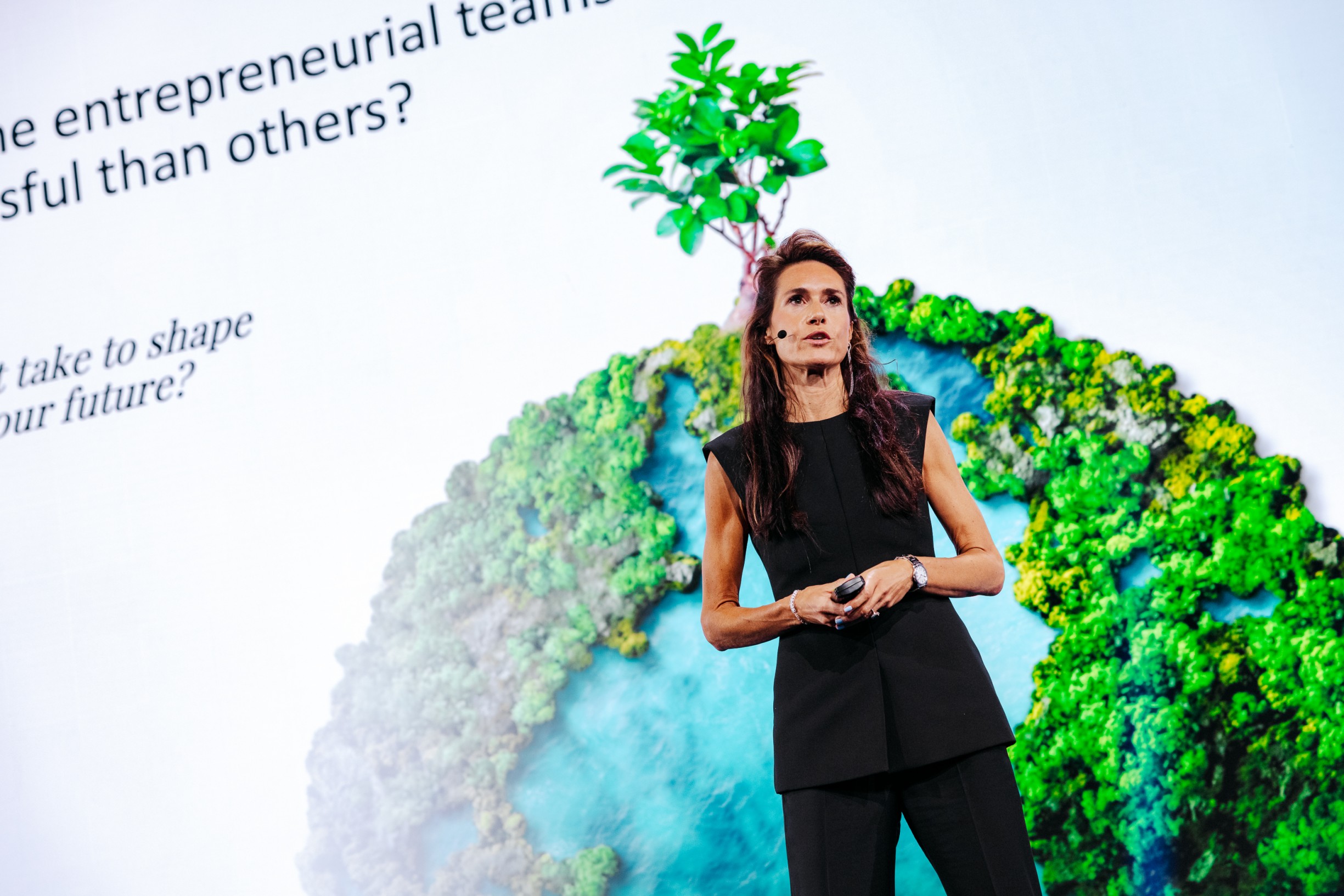
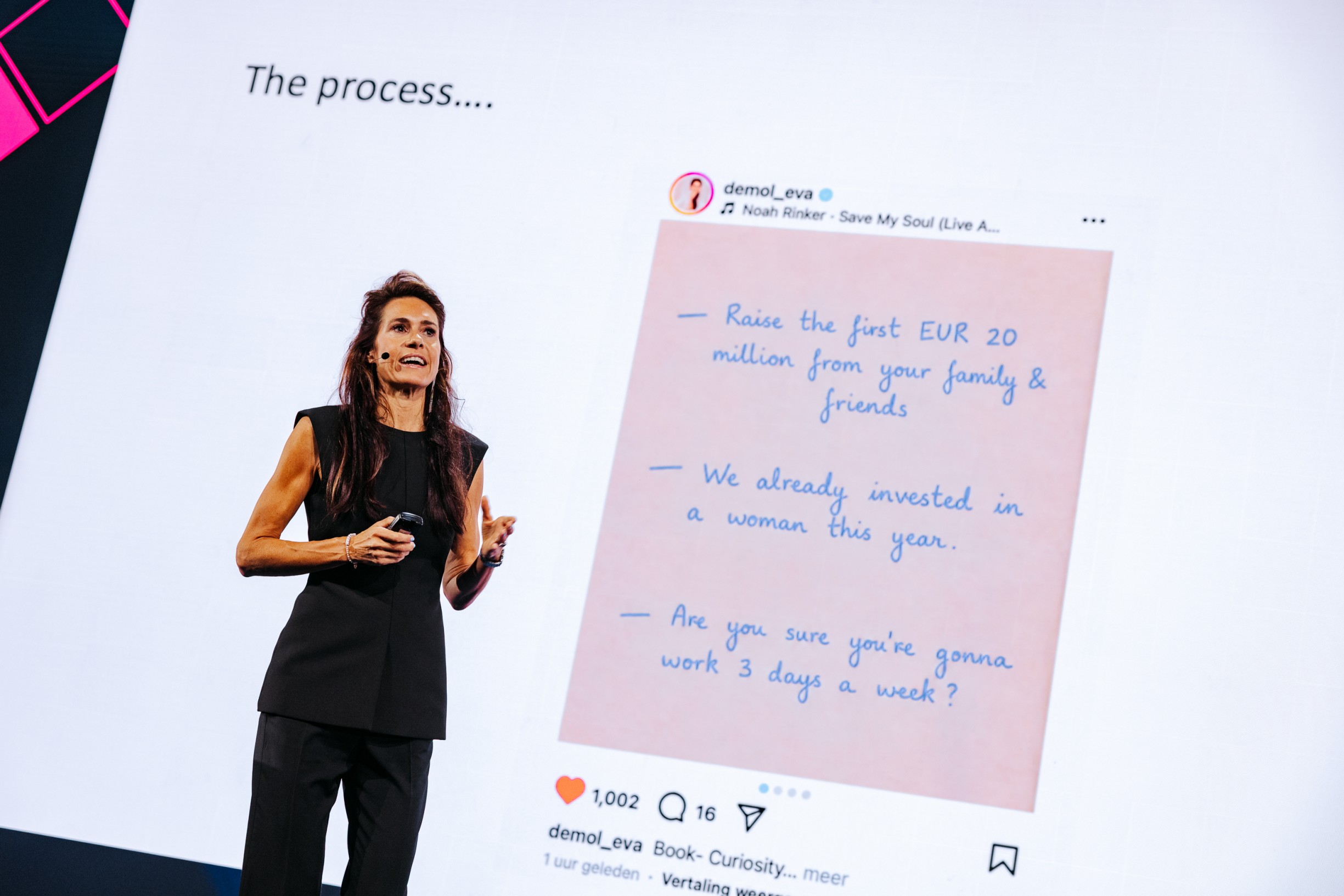
“This first 20 million you just raise from your family and friends.” Someone said it to Eva de Mol during her first fundraise. Her first thought: she needed different family and friends. At Amsterdam Business Forum 2026, the investor who made it anyway shared what she learned from more than 1,000 teams: the 10 ingredients of a successful team.
“Nine out of ten companies actually fail. If we look at those failures, we actually find that in 60% it is due to the team. Not the product, not the market. It’s really this team.”
Investor, scientist, and author Eva de Mol opened Block 3, about building human-centered organizations. She raised $80 million for a variety of funds and invested in more than 45 companies. It was extremely difficult, she says. One investor loved her vision but added: “We already invested in a woman this year.” Investing in thirty men? No problem. One woman? Box checked.
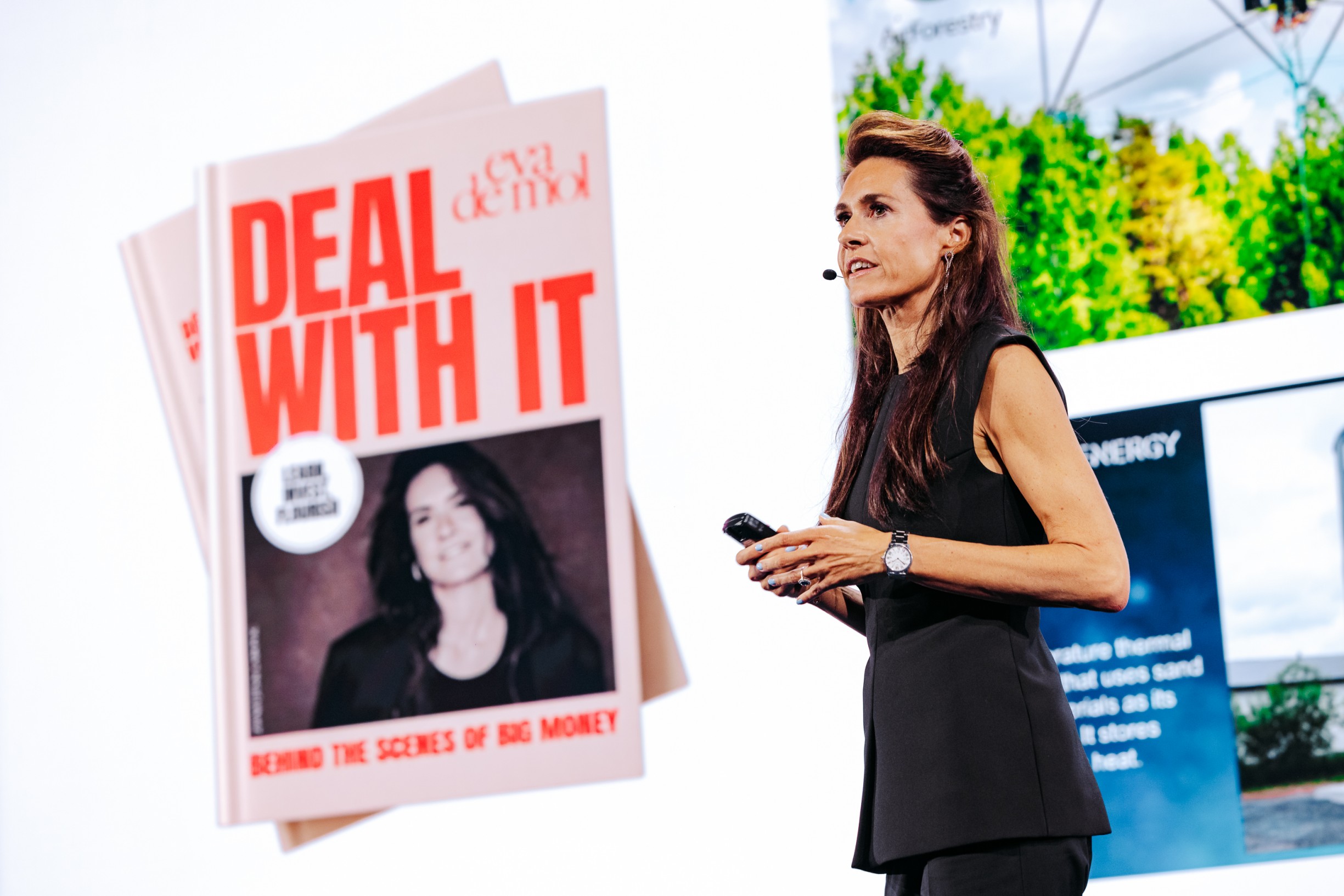
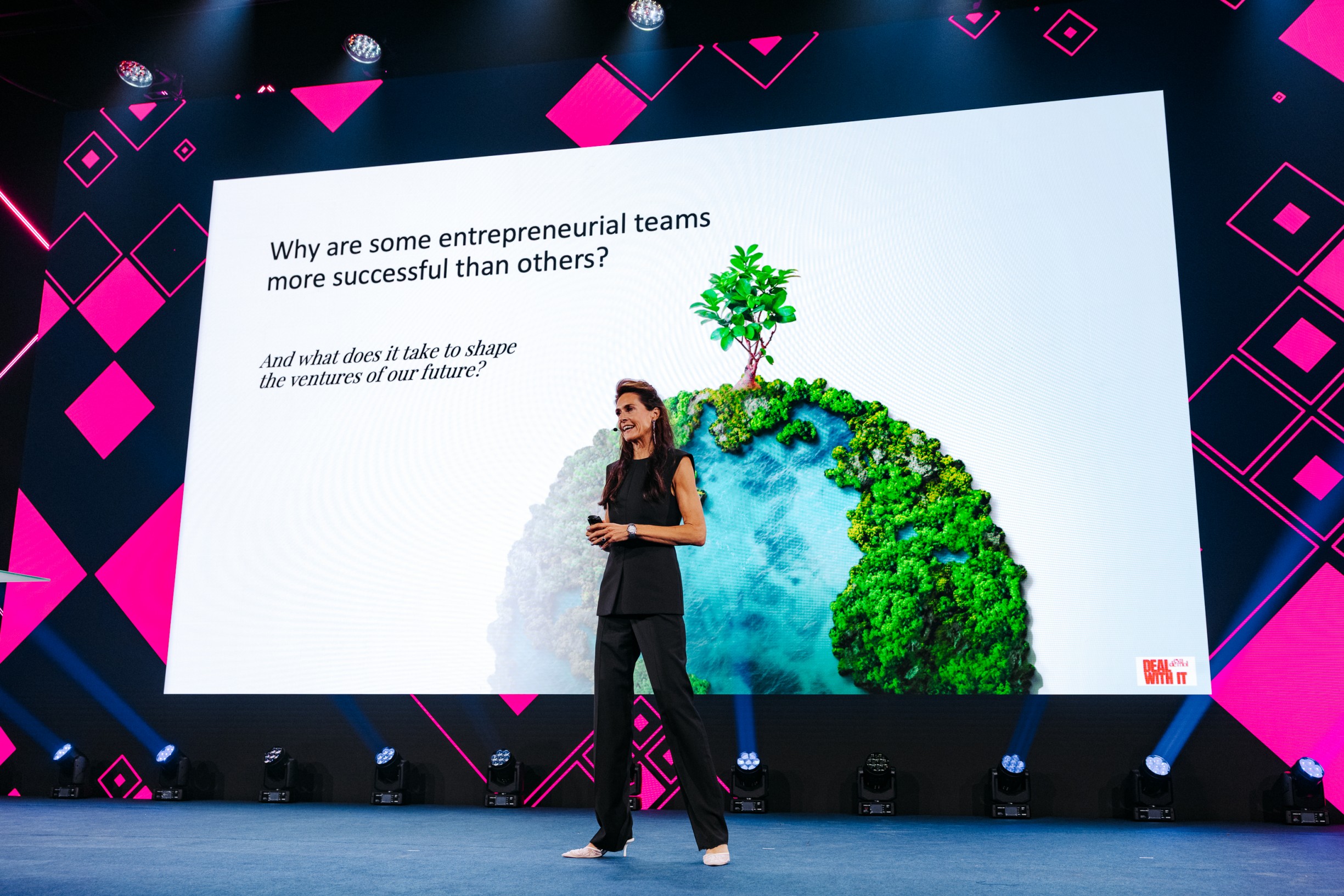
As a scientist, Eva spent years on one question: why do some ventures succeed, while others with the same market and the same product fail? For her PhD research, which started at Berkeley, she tracked more than 1,000 entrepreneurial teams over five years. She wrote down her lessons in her book Deal With It. On stage, she served them as 10 ingredients. Here is the full recipe, followed by five of them up close.
The recipe: 10 ingredients of a successful team
- Team, team, team: in 60 percent of failures, the team is the reason.
- We have to take risk: “If you are playing small, you’re not playing.”
- Complementary skills are key: does this person complement you, or do you just like them?
- Passion is a key predictor of success.
- Failure predicts team success.
- Create task-related conflict.
- Hire slow, fire fast: the first 10 people you hire build your culture.
- Diverse teams outperform homogeneous teams.
- Your network is your most valuable asset.
- Radical ownership: winning teams don’t wait.
Ingredient 4: hire for passion
“Too much experience can actually hold people back in innovating and thinking about new things.”
Picture a team that looks great on paper. They’ve been to Harvard, the whole shebang. But if they don’t score high on passion, Eva says, “it actually turns out very bad.” She calls the downside of experience the gray hair fallacy: everything you’ve learned starts working against what you’re building. That’s why she works with younger people on purpose.
People sometimes ask Eva if you can measure passion. You can, she says, with a lot of great frameworks. There are three types of passion. Some founders love inventing: the typical product person. Others love founding: set something up, build it, sell it, and start the whole ride again. A third group loves developing: infrastructure and professionalizing the organization. At the start, you need all three. As the venture grows, it gets complicated. The founder who is super excited about the technology is probably less excited about selling it.
Concrete lesson for you: Before your next hire or promotion, ask what the candidate loves most: inventing, founding, or developing. Then check who on your team is excited to sell.
Ingredient 5: we need losers
“Founders that start something and fail are more successful than founders that have not failed at all.”
This is Eva’s favorite finding, and it blew her mind, because she started her career as a scientist, where everything needed to be straight A’s. Spanx founder Sara Blakely learned it at home. Every Friday evening, her dad asked: “What have you done this week that failed?” If nobody had failed at anything, they had a problem. Nobody had gone out of their comfort zone.
The same goes for innovation in large organizations. Did every project in your innovation budget succeed? Then “you probably have not been creative enough.” And the Netherlands, Eva says, is a very risk-averse society, “and sometimes that actually does hold us back.”
Concrete lesson for you: Take Eva’s challenge: try one thing this week you’re not sure will work out. At the end of the week, ask your team what they tried that failed.
Ingredient 6: make sure your team fights about the work
“There needs to be that safety within innovative teams to really challenge each other.”
A founding team comes in to pitch. Eva asks: “How do you work together? Do you fight sometimes? Do you have conflict?” Often, the answer is: “We’re really good together. It’s a really nice group.” Then, Eva says, they have a problem. People need to dare to speak up when the work goes wrong. For that, they need trust and psychological safety. Eva points to a big study from Google: the most successful teams weren’t the smartest teams. They were the teams with the best team dynamic.
Concrete lesson for you: Ask Eva’s pitch question in your next team meeting: do we fight sometimes? If everyone says no, that’s your first agenda item.
Ingredient 8: build technology with a diverse team
“Talent is distributed equally, but opportunity is not.”
In venture capital, only 2 percent of all funding goes to diverse founding teams, and most tech companies are not diverse. The result: biased algorithms. ChatGPT advises women to ask for less in salary negotiations. Ask it for a picture of a housekeeper, and you get “a really bizarre selective overview of people.”
The week before Amsterdam Business Forum, Eva works in San Francisco with a group of guys who are building a photo app. She asks it to remove the stain on her shirt. The app gives her bigger boobs and different lips. The room laughs. “This is actually not funny,” Eva says. Probably everyone in the room uses some sort of AI. And without a diverse group of people building it, our kids and students do their schoolwork with biased technology.
Concrete lesson for you: Before you launch your next product or AI tool, look at who built it and who tested it. Then invite the people who are missing.
Ingredient 9: meet 10 new people
“I think sometimes we think about networking as work. Well, you are all here today, so clearly you don’t.”
Opportunity is not going to knock on your door, Eva says. So when she started out with her business partner, they made a deal: at every new place, they both had to meet 10 new people. Otherwise, they weren’t allowed to go home. It worked really well. They both liked to go home early.
Concrete lesson for you: At your next event, use Eva’s rule: 10 new people before you’re allowed to go home.
Different family and friends
Eva didn't grow up in a family of money, and the world of capital turned out to be a closed network. "I could never have done anything if it was not because of a network of my own." In the end, she made her way to the money anyway.
Her advice for you: “Take the lesson around failure and building your network with you this week.”
Five questions for reflection
Ready to check your own recipe? Start here.
- Who on your team complements you, and who do you just like?
- Which of your experiences has become a downside?
- What are you waiting for someone else to allow?
- Who is building your culture right now?
- Where are you playing small?