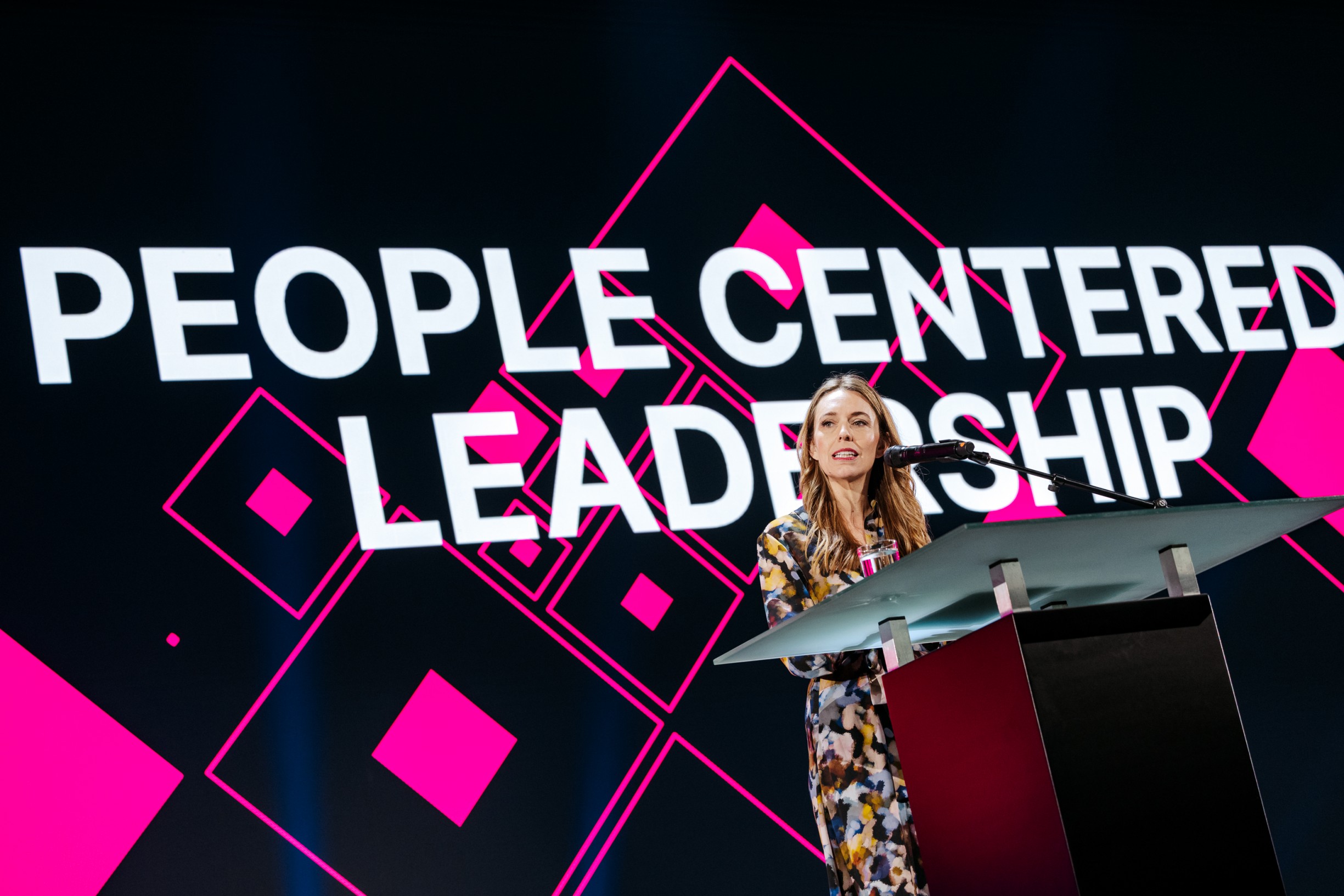
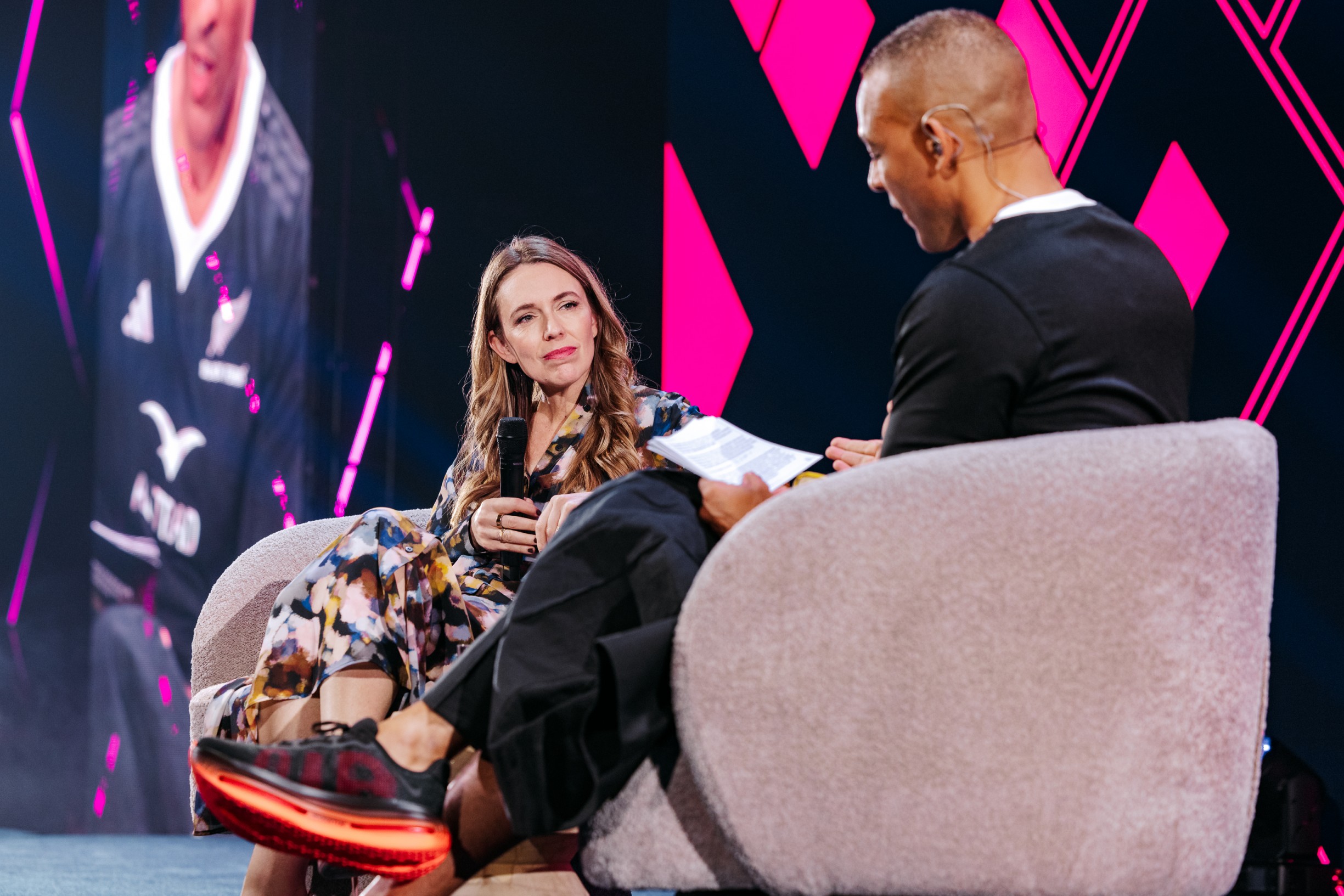
Up close, with questions straight from the room. At Amsterdam Business Forum 2026, VIP guests got a second session with Jacinda Ardern. Her answers are honest, personal, and surprisingly practical.
“No one who is in politics is weak.”
Jacinda Ardern is the former Prime Minister of New Zealand. In the VIP session, leaders and entrepreneurs ask her about crisis, performance, power, and legacy. Five questions, five insights, five lessons.
1. Empathy is a strength
Q (a Dutch author who writes about women in times of crisis): “What do women bring to leadership in times of crisis?”
Jacinda: “I’m really determined to break the assumption that empathy equals weakness.”
Jacinda doesn’t claim to be an expert on gender. But she sees a double assumption: women are more empathetic, and empathy is weakness. She entered politics thinking she was too thin-skinned for it. The personal attacks turned out to be the easy part. Someone once mailed her a newspaper clipping of a dog ad, with human teeth pasted over the dog’s face. The caption, in capitals: Why do you look like this? Someone had spent 40 cents to send it. She laughed and filed it. Eighteen years later, she still has it.
What hurt was something else: anyone saying she wasn’t doing enough on child poverty, or didn’t care enough about the people she served. “That’s the kind of stuff you should feel.” Her conclusion: “Those who espouse empathy in politics have a strength and resilience that I think would outmatch some of those who are motivated by ego.”
- For you, the lesson is simple: when criticism stings, check what it touches. Insults about you can go in a drawer. Criticism about the people you serve deserves your attention.
2. Share bad news first
Q (a consultant who supports leaders through change): “How do leaders keep going when budgets are cut and people are laid off?”
Jacinda: “When times are hard, that’s the time to be open and transparent and bring everyone in your team in.”
It starts with a principle. In dark times, we tend to treat optimists as naive. Jacinda sees it the other way around. “Optimism is most necessary during dark and difficult times.”
Then comes the practice. After a bad poll, the usual reflex in politics is to close ranks. No talk about internal numbers, no open discussion, and definitely no coups. Jacinda took the opposite view. The night a bad public poll came out, she told her team: “You’ll see that poll. I want you to know what our internals are. Here they all are for you all to see. Let’s talk about them tomorrow.” The next day, they discussed whether they were on the right track and what to do differently. “And that really got us through.”
- So next time the numbers disappoint, share them with your team before anyone else does. Then ask what should change.
3. Protect your sleep
Q (an expert in sustainable high performance): “What kept you performing through years of crisis?”
Jacinda: “This is probably not what you expect me to say, but I found maintaining high performance came down to cortisol and adrenaline.”
“Would I promote it as a strategy? I would not.” When she took office, little sleep was a badge of honor. Former prime minister Helen Clark famously slept four hours a night. So when people told Jacinda she mustn’t be getting much sleep, she proudly agreed. She stayed the latest and worked the hardest, and her team followed suit. No one went home.
Then a sleep doctor stopped her at an airport and told her she was reducing her cognitive function. Her responsibility, she realized, “wasn’t to be sleep deprived. It was to be mentally agile and ready to make a decision.” She started prioritizing sleep, found it built her resilience, and encouraged her team to do the same. Her advice today: “The most important thing to prioritize when you’re in leadership is your own sleep. And yet it is the thing we martyr.” Because, as she puts it: “We have to model what we expect.”
- Ask yourself: what does your working day teach your team about sleep? Protect yours, visibly, so they feel free to protect theirs.
4. Kindness includes the hard conversation
Q (an employee of a company with a lot of empathetic leadership): “Why does power still seem to be the default, even in companies full of empathy?”
Jacinda: “Kindness actually means having difficult calls as well.”
Power came with the job, she says. The harder question was what strength looks like, and whether kindness fits in. One example: ministers who were struggling and under fire in the media, sometimes unfairly. “It’s like being a wounded gazelle. They come for you.” You might expect a kind leader to leave them alone. Jacinda brought them in: “You’re having a really hard time. I can see that. I want you to know how much empathy I have for that.” And then: “Here’s some options. What do you think we should do?”
“Those are really uncomfortable conversations,” she admits. That's why she pushes back on the idea that kindness is weakness.
- Is someone on your team struggling while you keep quiet to be kind? Have that conversation this week: name what you see, then ask what they think should happen.
5. Build change that outlasts you
Q (the founder of a foundation for children in poverty): “How did you make your child poverty policy outlast your own government?”
Jacinda: “Measure it, set a target, have a strategy. That’s what the law said.”
In New Zealand, policies often last one political cycle: three years. Child poverty and climate change, Jacinda believes, should outlive any single party. So her government passed laws that left the policy open. Every future government can bring its own values and ideology within that framework. They took the child poverty law to the opposition and asked: “What will it take for you to support this?” It won cross-party support. And every budget must include a report on child poverty. It’s still there. “God help you if you’re the government that says you don’t wanna measure child poverty anymore.”
- For leaders, the same applies: pick one initiative that depends on you and build it into something that stays. A measurement, a report, or an agreement with the people who might otherwise undo it.
Final word: build it in
One more question, about AI and the environment. Jacinda’s focus is elsewhere. The Christchurch terror attack was livestreamed on Facebook. In response, New Zealand started the Christchurch Call to Action with governments, civil society, and tech companies. Since then, she has worked on guardrails for technology. Her advice sounds a lot like her lesson on child poverty: “We need guardrails. It is much easier to build them in by design than it is to retrofit them.”
